You Can Rank #1 and Still Be Invisible: How the World of SEO Is Changing

For twenty years, the rules of being found online were stable: optimise, climb the rankings, and the clicks followed. The whole discipline of SEO, an industry worth $80–100 billion globally11, rests on one assumption, that search ends with a list of links, and that people click them. That assumption is breaking faster than most brands realise.
The audience has already moved
ChatGPT reached around 900 million weekly users by early 2026, handling some 2.5 billion prompts a day1, while Google’s Gemini app doubled in a year to 900 million monthly users. Crucially, this isn’t confined to chatbots: Google’s AI Overviews now reach 2.5 billion people a month, and its AI Mode has passed a billion. The largest deployment of AI-generated answers isn’t a ChatGPT rival, it’s Google search itself. Even people who never touch a chatbot are reading a synthesised answer rather than scanning ten blue links.
The clicks are disappearing
The consequence is stark. Pew Research studied 68,000 queries and found that when an AI Overview appears, clicks drop by roughly 47% in relative terms2. Ahrefs measured the click loss for the top organic position at 34.5% in April 2025; by December it was 58%3. Most searches now end without a click at all, and Gartner predicts a 25% decline in traditional search volume4. We are hearing from clients directly the uncomfortable truth: a brand can hold every ranking it spent a decade building and still watch its traffic fall away. The rankings held. The clicks didn’t. Winning at SEO no longer guarantees being seen.
You can rank #1 — and still lose the clicks
Click-through loss for the top organic result when a Google AI Overview appears
| Date | Click-through loss |
|---|---|
| April 2025 | -34.5% |
| December 2025 | -58% |
Source: Ahrefs — analysis of 300,000 keywords
Migration, not replacement
The “Google is dying” headline is wrong, and strategies built on it will be wrong too. Google handles over five trillion searches a year, and 95% of ChatGPT users still use Google5. What’s migrating is tasks: navigation, shopping and quick lookups stay with search, while research, advice and “which one should I choose?” questions move to LLMs. Some 37% of consumers now start their searches with AI6, rising to three-quarters of under-30s7, and about half of ChatGPT use is asking, researching or seeking advice8. The migrating queries are the valuable ones — the moments someone decides what to buy and whom to trust, and they’re settled inside an AI answer, where a brand is either mentioned or it isn’t. Both destinations are now answer engines. Neither is served by traditional SEO alone.
The budgets are following
The money has noticed: 82% of marketers have allocated budget to AI visibility, with around a quarter of search and content budgets now routed there9, mostly carved out of existing SEO, content and PR lines. The spend isn’t just growing; it’s moving. Yet only around 14% of marketers track their visibility in AI answers, and barely one in ten feel prepared. Committed budgets are chasing scarce expertise, the gap a GEO industry already worth over a billion dollars and growing at 40–50% a year exists to fill10.
Being the answer
Generative Engine Optimisation keeps the fundamentals, authority, technical health, clear structure, but shifts the emphasis to content built to be understood and cited: clear entities, schema markup, genuine expertise, consistency across the open web. The metric changes too: not rankings, but your share of AI answers. And the ground is unclaimed, in the UK alone, more than 35,000 firms share a £24.6 billion search-marketing consultancy market with no dominant player11, and nobody yet owns GEO. The world of SEO isn’t ending. It’s being absorbed into something bigger: the business of being the answer. The brands that understand this early won’t just survive the transition, they’ll be the ones the machines recommend.
Ready to be the answer?
This is exactly the shift FanePath AI was built for. FanePath helps brands see how they show up in AI answers, measuring your share of the questions your customers are asking LLMs, and then closes the gap, from visibility audit to full GEO strategy. If you’d like to know where your brand stands today, get in touch: contact@fanepath.ai
References
- 1. Panto AI — LLM Statistics 2026 (platform user numbers)
- 2. Pew Research Center — Google users are less likely to click on links when an AI summary appears
- 3. Ahrefs — AI Overviews Reduce Clicks by 34.5% and May 2026 update: 58%
- 4. Gartner — Search engine volume to drop 25% by 2026
- 5. Similarweb — Is AI Replacing Search? (95% ChatGPT–Google user overlap)
- 6. Search Engine Land — 37% of consumers start searches with AI
- 7. AP-NORC — Young adults are leading the way in AI adoption
- 8. NBER Working Paper 34255 — How People Use ChatGPT
- 9. Digiday — How marketers are building the infrastructure for AI search
- 10. Dimension Market Research — Generative Engine Optimization (GEO) Market
- 11. IBISWorld — SEO & Internet Marketing Consultants in the UK and The SEO Works — UK SEO Industry Report 2026
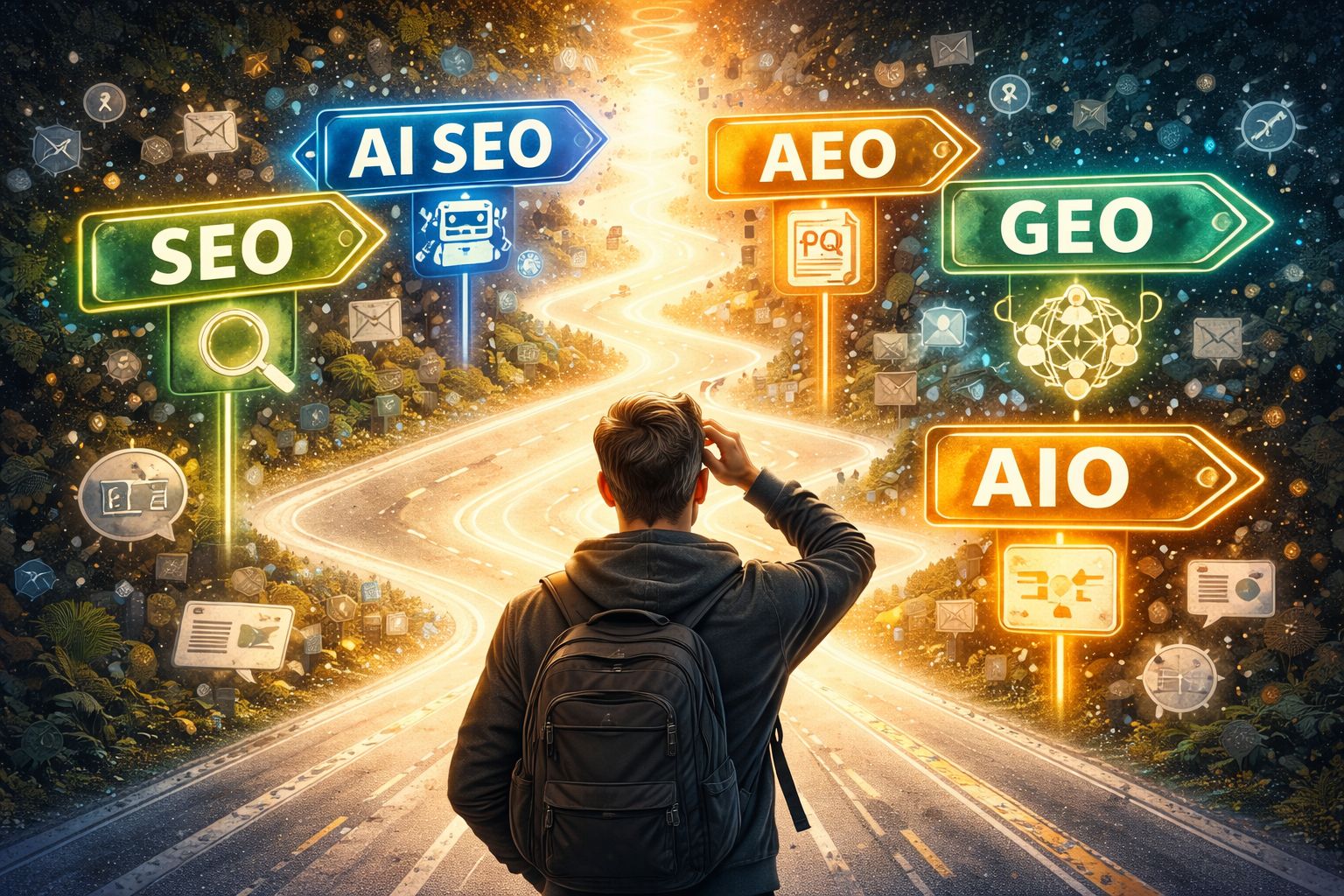
Lost in AI SEO, AEO, GEO, AIO? Here's What Actually Matters for AI Visibility for Brands
The AI optimisation landscape is crowded with acronyms. We break down AI SEO, AEO, GEO and AIO to help you understand what actually matters for your brand's AI Visibility.

FanePath AI Decodes ChatGPT Usage: Key Research Insights Brands Can't Ignore
Analysing 1.5 million ChatGPT conversations, the NBER study reveals real patterns and actionable insights for brands. We decode what it means for AI visibility.
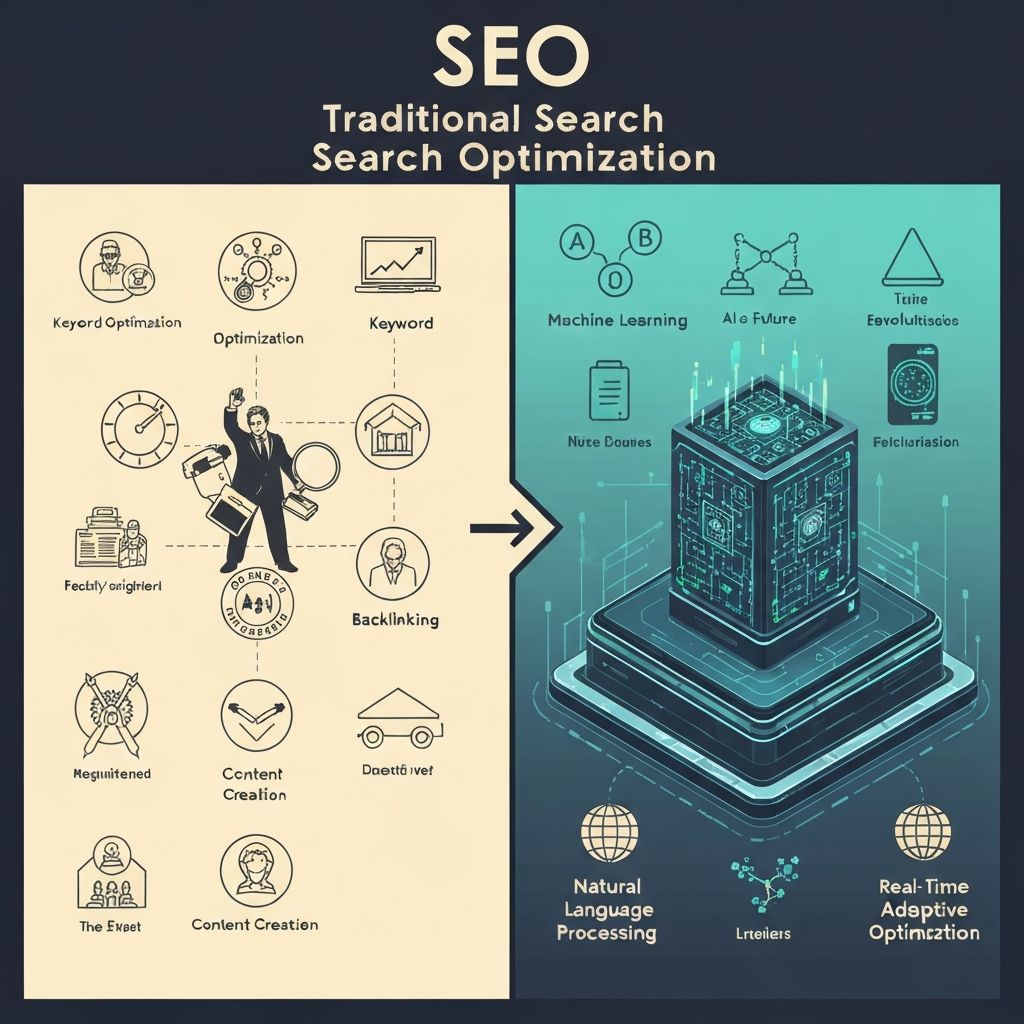
Is Traditional SEO Dead?
As consumer behaviour evolves and AI changes how people discover brands, is traditional SEO still enough? We explore the AI Visibility gap and what needs to change.
See what AI is saying
about your brand today.
Get in touch and we will show you your AI narrative, your score, and where to focus first.
Contact UsShaping the AI era, one brand narrative at a time.